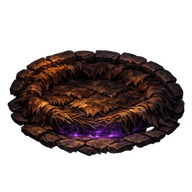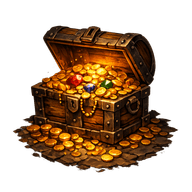
Treasury
Stores gold. Build it early and near where you are digging.
The game
ImpKeep is a dungeon-builder in the Dungeon Keeper tradition: you never control a hero directly, you shape the place they have to walk into. Here is the whole thing, without the marketing voice.
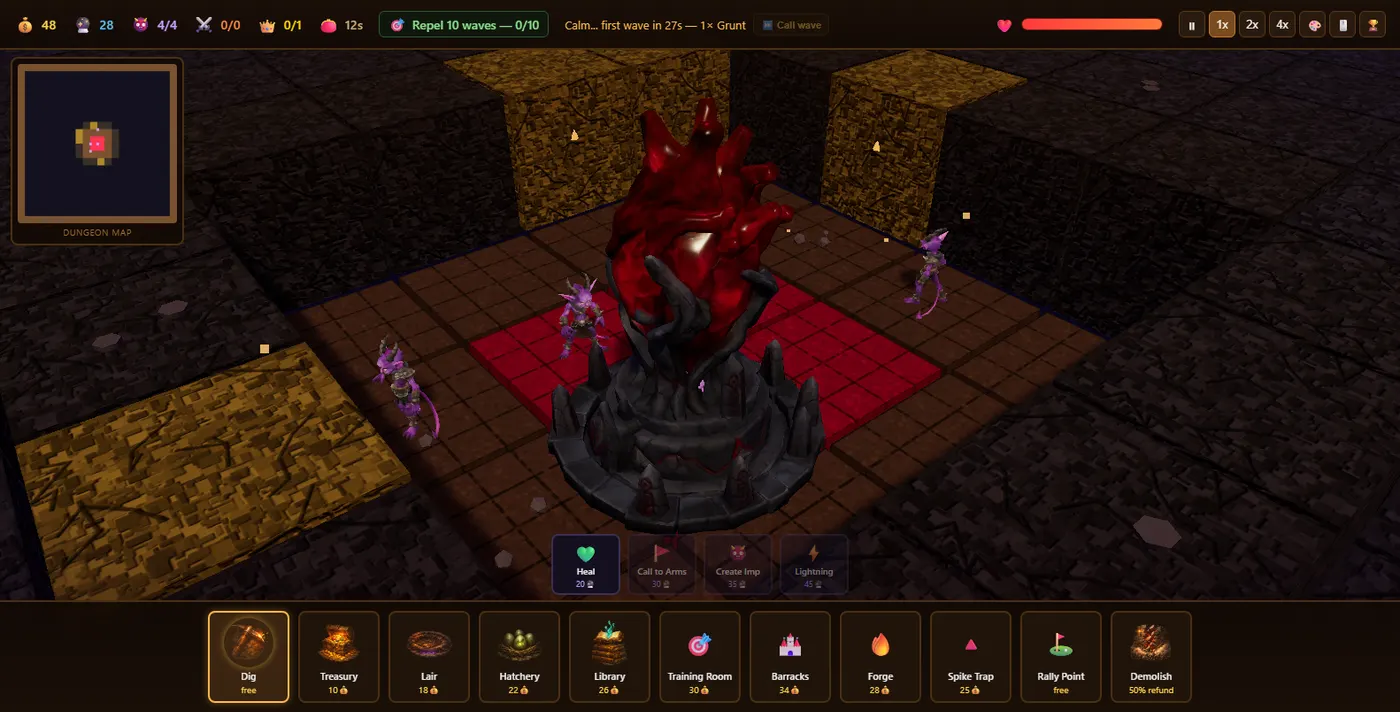
The map starts as solid rock with one lit room in it. You mark tiles to dig; imps walk over and clear them. Cleared rock becomes floor you can claim and build on, and some of it contains gold seams — which is the only income you get.
That makes the first two minutes genuinely a decision rather than a formality. Dig toward gold and you can afford rooms early but your dungeon sprawls into open corridors. Dig compactly and you stay defensible but broke.
Imps are not invincible. They are workers with hit points, and monsters will target them. An imp economy you never look at is an imp economy that quietly dies during wave four.
Rooms are built on claimed floor and cost gold. Each one does exactly one thing, and tiles of the same room type that sit next to each other reinforce one another — a compact block beats the same number of tiles scattered around.
Stores gold. Build it early and near where you are digging.
+2 maximum imps per tile.
Replacement imps arrive faster.
+0.6 mana per second per tile.
+1 warrior training slot.
Rally point and warrior training. You need at least one.
+25% imp dig speed per tile.
Imps dig, claim floor and carry gold. They are your economy and they are fragile.
Warriors are hired from the barracks and fight what comes in. They rank up from kills — Recruit, then Veteran, then Elite — and those multipliers stack on top of whatever your barracks level gave them when they were hired. A veteran from a level-3 barracks is not the same unit as a veteran from a level-1 barracks.
Heroes are rare. A hero earns XP and levels during a run, and has a cleave attack that no warrior gets — the point being that a hero is qualitatively different, not just a warrior with bigger numbers.
Monsters arrive on a timer you can also trigger early if you would rather fight on your own schedule. Three archetypes rotate in as the run goes on:
Every fifth wave is a boss wave: a heavily scaled monster with an escort built the same way a normal wave would be. Wave size is capped, so late waves get harder by composition rather than by throwing twenty bodies at you at once.
On a repeating timer, every imp and warrior draws wages from the treasury. If the gold is not there, somebody leaves. It is the mechanic that stops "build everything, worry later" from being a viable plan.
The game is in active development. A campaign of sequential missions is the current direction for progression, which makes saved progress a requirement rather than a nice-to-have. Touch controls, a leaderboard and more 3D assets are all on the list.